Vinyl fences for people who would rather not stain a fence again
Vinyl costs more than pine on the day it goes in and a lot less over the years after. In a climate that grows mildew on anything that stays damp, that trade appeals to a lot of homeowners.
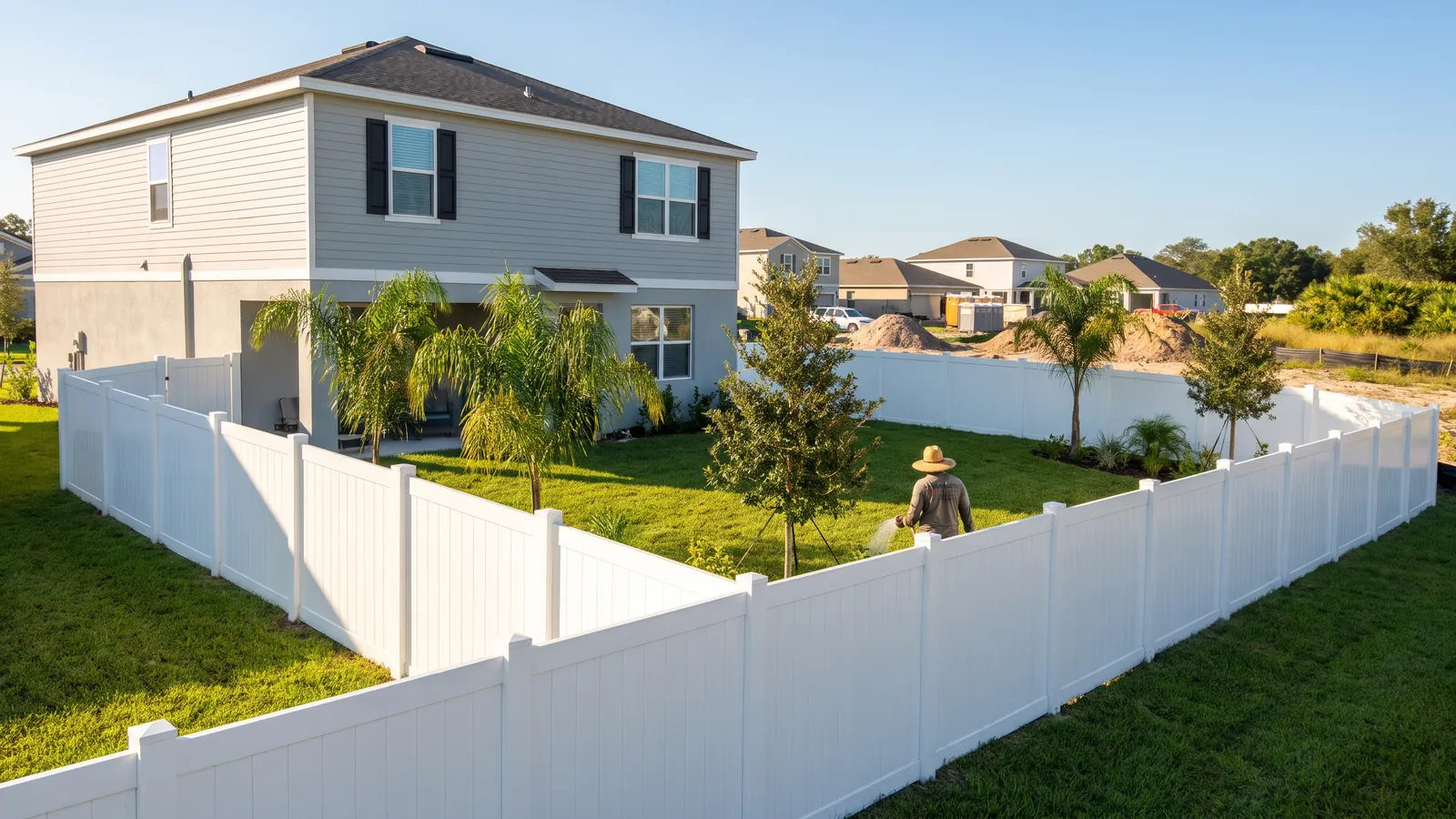
Vinyl, more precisely PVC, has become the default fence in many of the newer neighborhoods in Leland, Porters Neck and along the Market Street corridor, and in several of them the HOA specifies it outright. It does not rot, it does not need paint, termites ignore it, and the white, tan and grey panels stay clean with a hose and a soft brush once or twice a year. What vinyl does not do is flex the way wood does, so the quality of the post setting and the panel spacing matters more than it does on a wood fence.
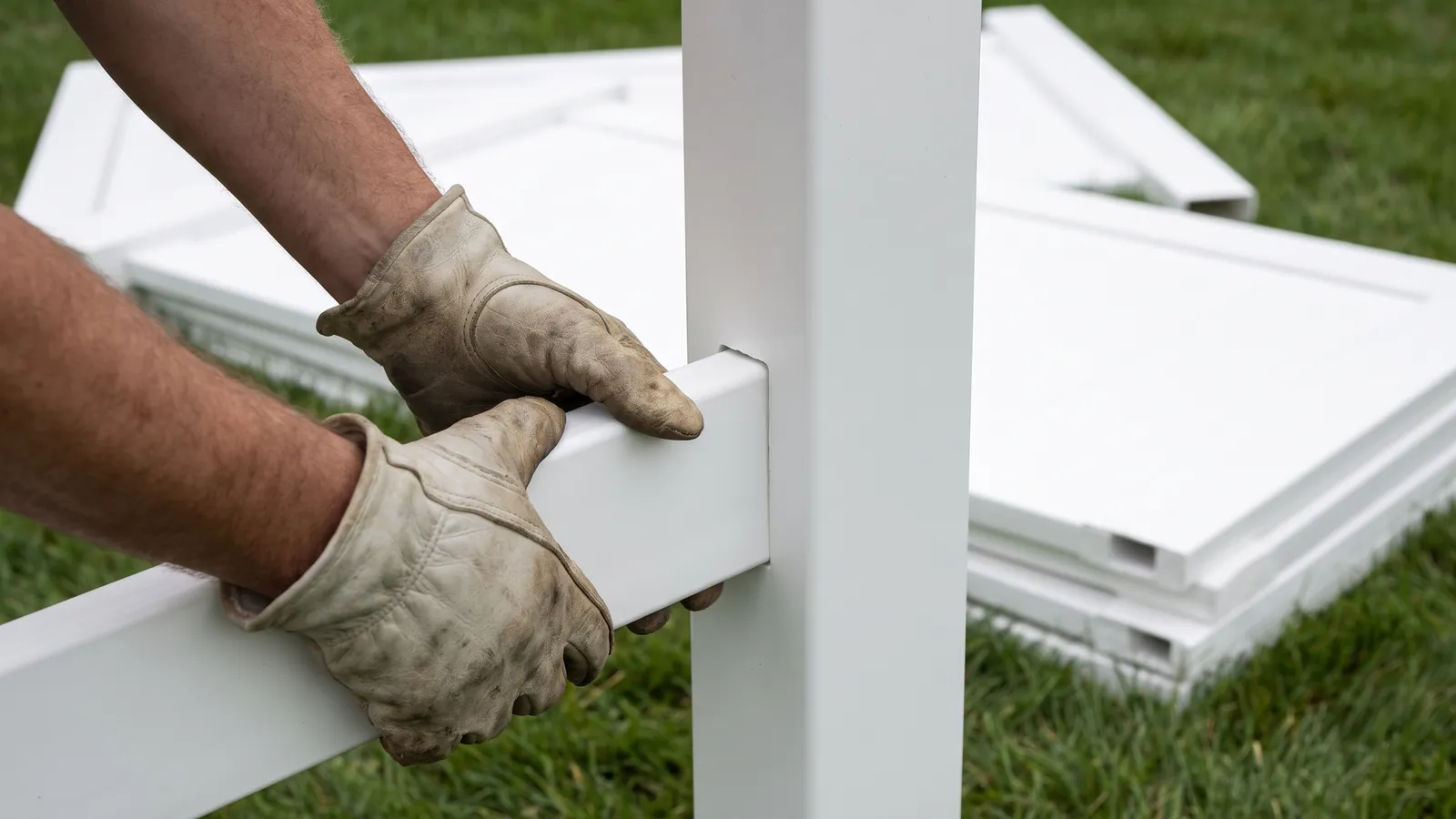
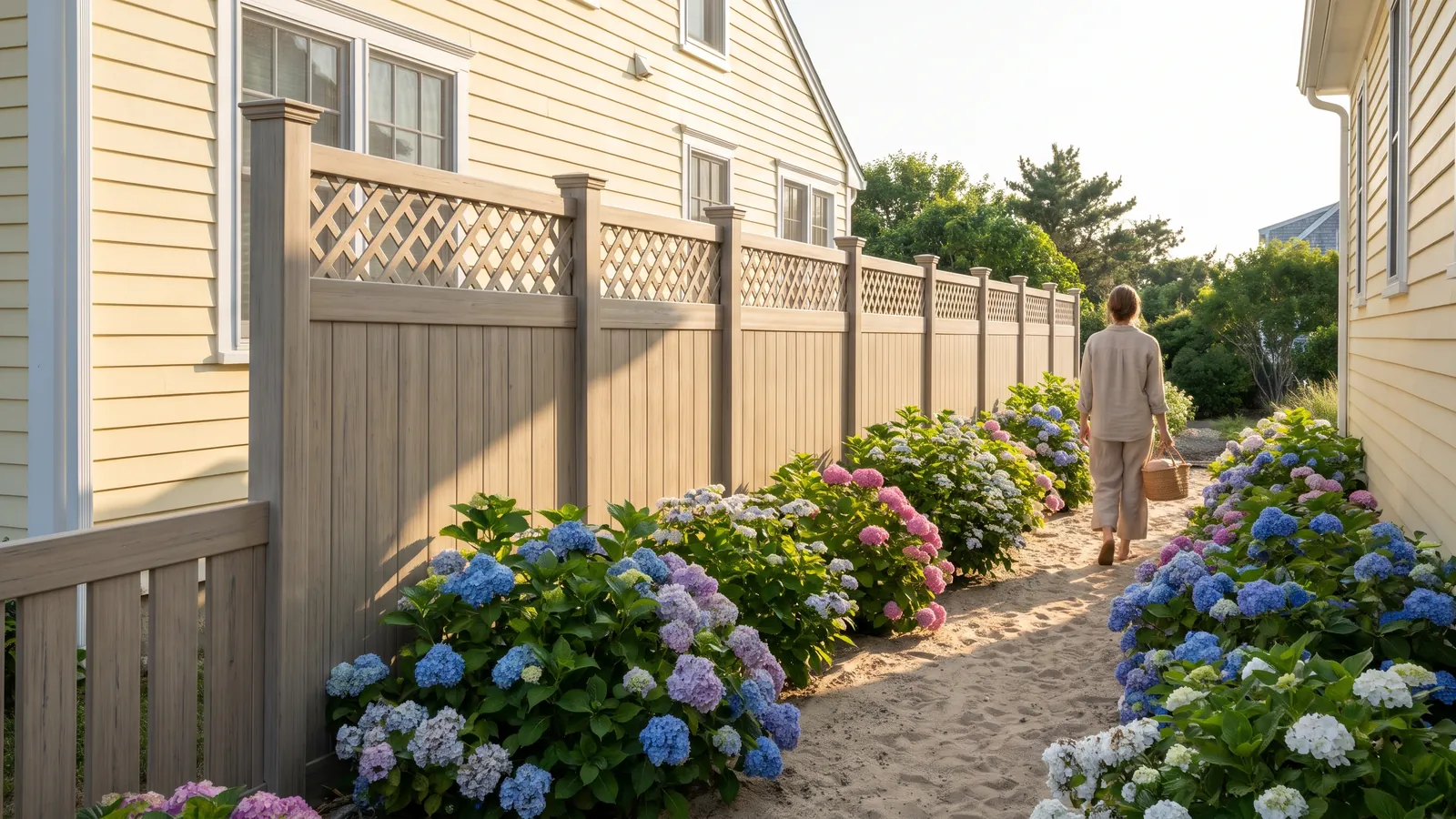
A vinyl fence is a kit of posts, rails and boards that slot together. The posts are hollow, so each one is set in a concrete footing, and on gate posts and exposed runs we add an aluminum insert or a steel stiffener inside the post so the gate does not pull it out of line. Rails lock into routed holes in the posts. Privacy panels use tongue-and-groove boards; semi-privacy styles leave a small gap or add a lattice top; picket styles run three to five feet for front yards and gardens.
Two coastal points are worth knowing. First, wind: a solid six-foot vinyl privacy panel is a sail, and on a waterfront or corner lot we may suggest a semi-privacy style or closer post spacing. Second, color: white is the most common and least expensive, while tan, clay and grey cost more and fade less visibly from the glare. Ask about a manufacturer warranty on the panels you choose; we leave the paperwork with you.
How a vinyl fence goes up
- Layout. Post spacing is set by the panel width, so the line is planned panel by panel with gates placed first
- Footings. Hollow posts are set in concrete footings, plumb and at the same height along a string
- Reinforcement. Gate posts and end posts get a metal insert so a heavy gate cannot pull them over
- Panels. Rails slot into the posts and boards lock together; on slopes the panels are stepped or racked to the grade
- Gates and caps. Gates hung on adjustable hinges, latches set, caps glued on, and the yard cleared
Vinyl fence prices
| What | Typical 2026 range | Notes |
|---|---|---|
| Vinyl privacy, 6 ft, white | $38 – $55 / ft | Tongue-and-groove panels |
| Vinyl privacy, 6 ft, tan or grey | $42 – $62 / ft | Colored and textured panels |
| Semi-privacy or lattice top, 6 ft | $40 – $60 / ft | Lets some wind through |
| Vinyl picket, 4 ft | $28 – $45 / ft | Front yards and gardens |
| Vinyl walk gate, 4 ft | $500 – $1,000 | With a reinforced post |
| Vinyl double drive gate | $1,400 – $2,800 | Usually 10 to 12 ft wide |
2026 planning ranges for the Wilmington area. Manufacturer, color and post reinforcement change the price; the written estimate itemizes them.
Questions about vinyl fences
Does vinyl crack in the cold?
Wilmington winters are mild, so cold cracking is rare. The bigger risk is impact: a lawnmower or a thrown branch can crack a board, and single boards can be replaced.
Will a vinyl fence blow down in a hurricane?
Any solid fence can fail in hurricane winds. Concrete footings, reinforced posts, closer spacing on exposed runs and semi-privacy styles all help. See the wind guide.
Does vinyl get mildew?
It can grow a green film on the shady side in humid months. It washes off with water and a mild cleaner; no pressure washer needed.
Can vinyl go on a slope?
Yes. Panels are stepped down in level sections, or some styles can be racked to follow a gentle grade.
Is vinyl allowed in my HOA?
In many newer communities it is the required material, often in a set color and style. Bring the HOA's standards to the estimate and we will price to them.
Related pages
Price your vinyl fences project
Tell us where the fence goes and what you have in mind. An estimator comes out, measures the line and leaves a written price, free of charge.
- Measured on site, not guessed from a photo
- Material, height and gates priced line by line
- Or call (910) 807-8208. Calls answered 24 hours, 7 days.