Stain and sealer: the cheapest way to add years to a wood fence
Sun, rain and humidity turn bare wood grey, then fuzzy, then cracked. A clean and a coat of stain every few years slows the whole process down.
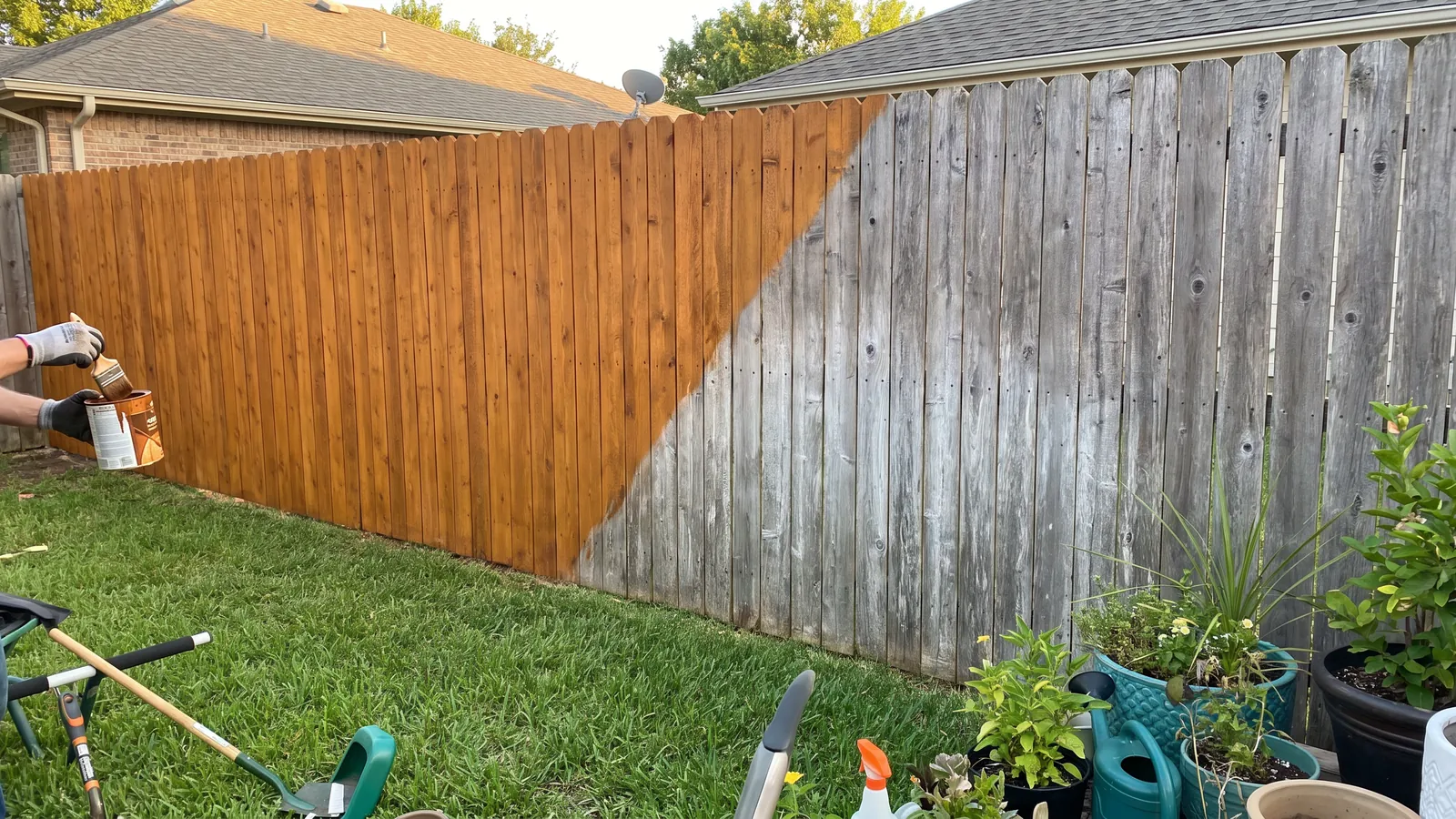
Wood fences in this climate take a beating from both directions. Summer sun breaks down the surface fibers, which is the grey you see after the first year, and the long wet spells let mildew and algae settle in on the shady side. Water soaks into the end grain and the bottom of the boards, and every wet-dry cycle opens the cracks a little more. A penetrating stain or water repellent does not stop any of that entirely, but it slows it, and it is far cheaper than replacing boards.
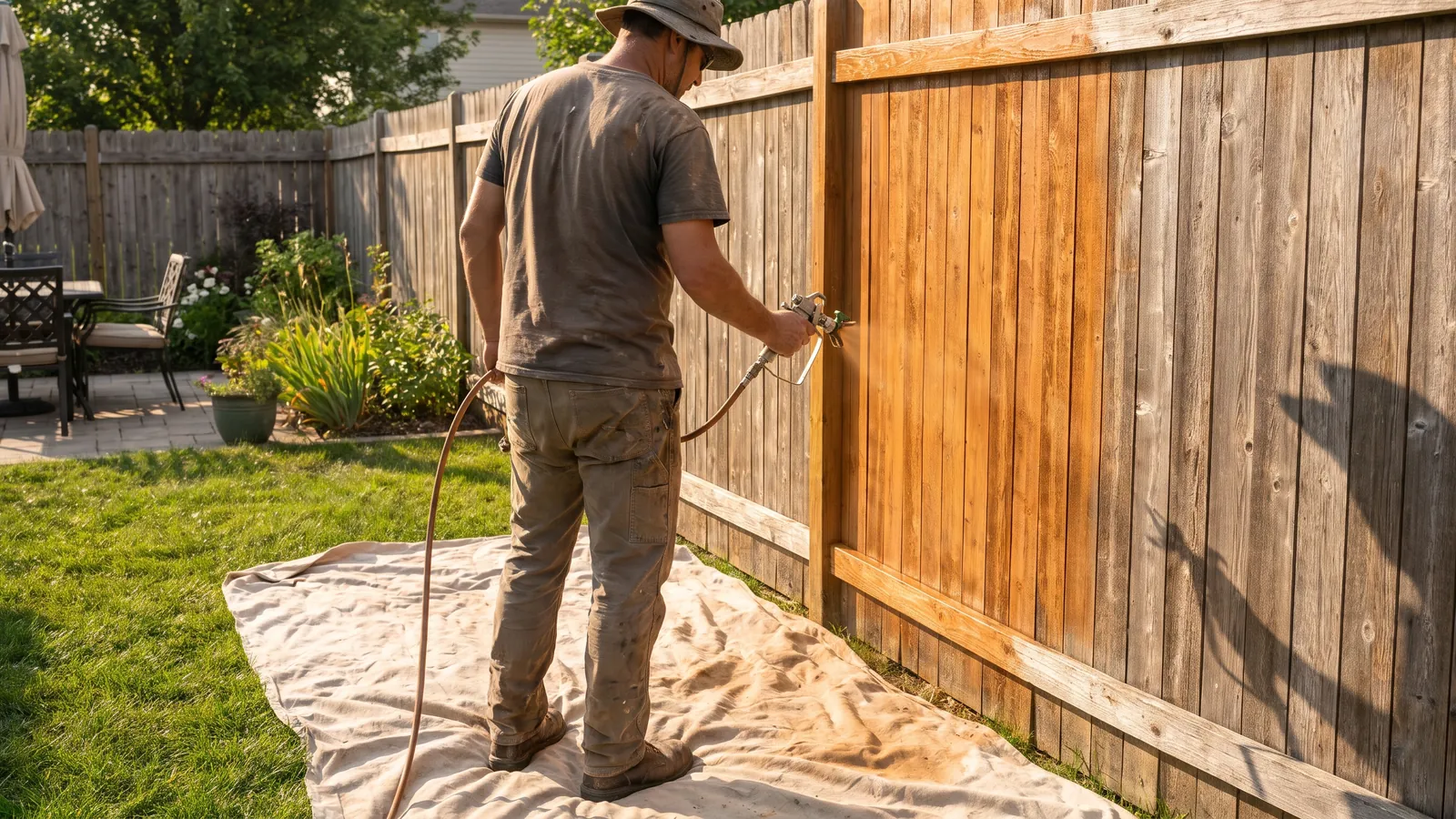
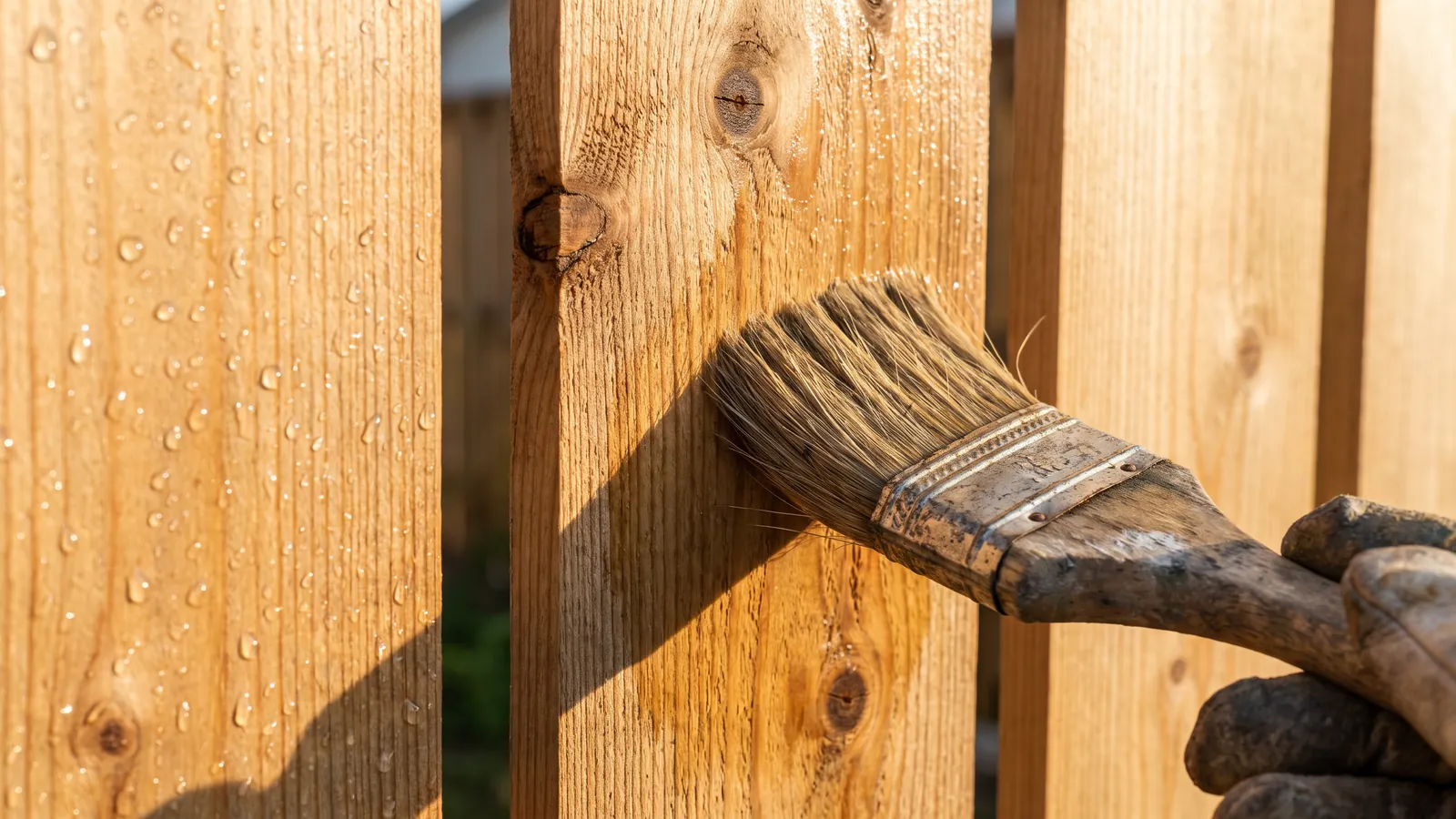
The job is three steps. First, clean: a wood cleaner and a low-pressure rinse to lift mildew, dirt and grey fibers without furring the wood. Second, brighten where needed, to restore the color and open the grain. Third, apply: a semi-transparent oil-based or water-based stain, which adds color and UV protection, or a clear water repellent if you like the natural look. We spray and back-brush so the stain gets into the grain and the gaps, and we protect plants, siding and concrete with drop cloths.
Timing matters. New pressure-treated pine needs to dry out before it will take stain, which in our summers can mean a couple of months. Older fences should be cleaned and dry for a day or two before coating. And because both sides of a shadow box fence and the neighbor-facing side of a privacy fence need coverage, we agree up front which faces are included.
How a stain job runs
- Inspect. Loose boards, popped nails and rot fixed before coating
- Protect. Plants, siding, concrete and the neighbor's side covered where needed
- Clean and brighten. Low-pressure wash with wood cleaner, then brightener, then rinse
- Dry. The wood is left to dry before any stain goes on
- Apply. Sprayed and back-brushed into the grain and gaps, with a final check for drips and missed spots
Staining prices
| What | Typical 2026 range | Notes |
|---|---|---|
| Clean and brighten | $0.40 – $0.80 / sq ft | Per face |
| Semi-transparent stain, one face | $1.00 – $1.90 / sq ft | Includes cleaning on most jobs |
| Clear water repellent, one face | $0.80 – $1.50 / sq ft | Natural look |
| Example: 150 ft of 6 ft fence, one face | $900 – $1,700 | About 900 sq ft |
2026 planning ranges for the Wilmington area. Very weathered or mildewed fences take more prep.
Questions about staining and sealing
How often should I stain my fence?
Every two to four years for a semi-transparent stain in full sun, a little longer in shade. When water stops beading on the boards, it is time.
Do you pressure wash fences?
We use low pressure with a wood cleaner. High pressure furs and gouges soft pine.
Can you stain a brand-new fence?
Once it is dry. Sprinkle water on it; if it soaks in, it is ready.
Will stain stop mildew?
Many stains include mildewcides that slow it. Shady, damp runs still need an occasional wash.
Do you stain the neighbor's side?
Only with their permission. We agree which faces are included before starting.
Related pages
Price your staining and sealing project
Tell us where the fence goes and what you have in mind. An estimator comes out, measures the line and leaves a written price, free of charge.
- Measured on site, not guessed from a photo
- Material, height and gates priced line by line
- Or call (910) 807-8208. Calls answered 24 hours, 7 days.