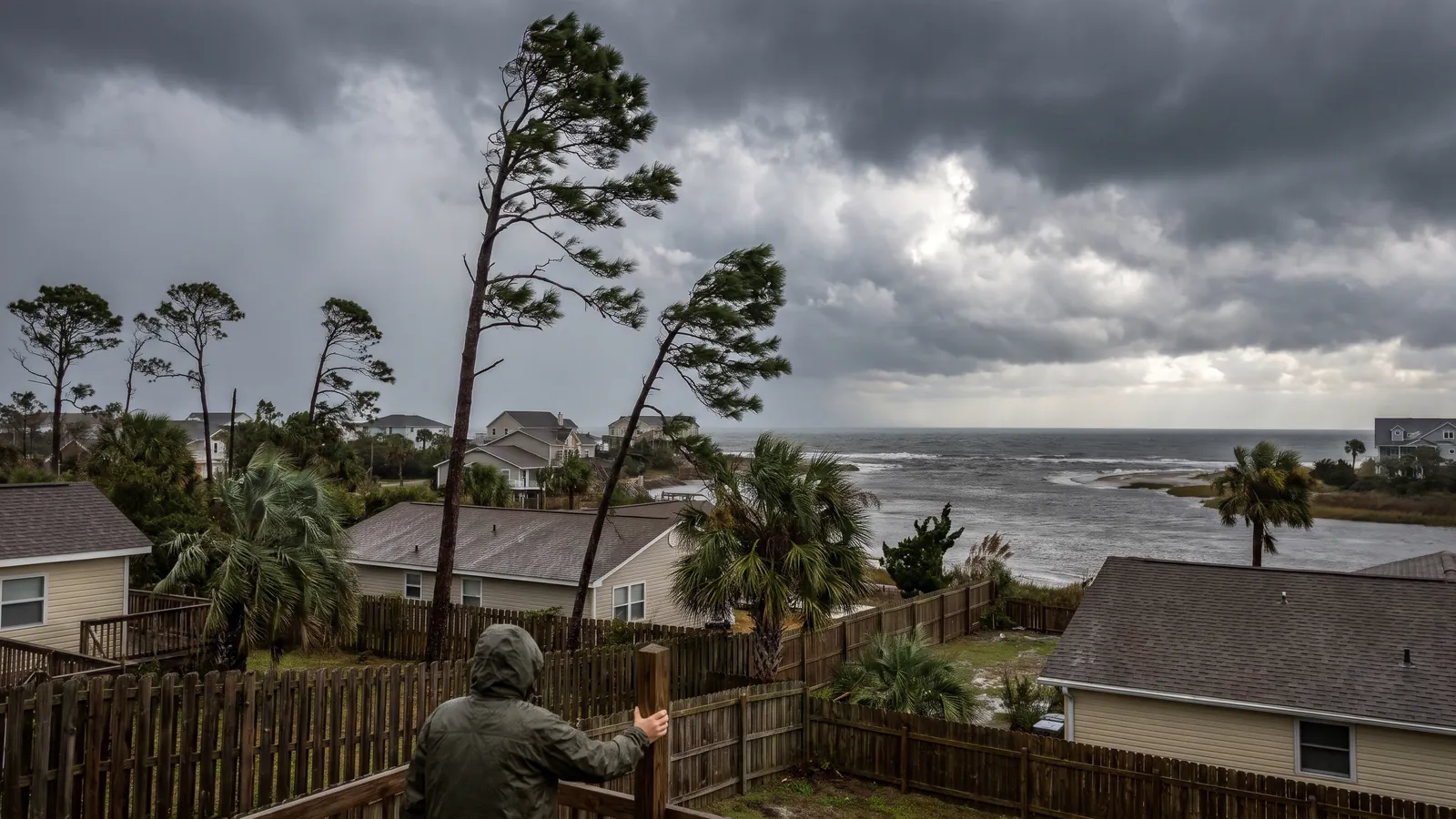
The Cape Fear coast has seen enough storms in the last decade to make the point. Hurricane Matthew passed offshore in October 2016 but brought heavy rain and flooding. Florence came ashore near Wrightsville Beach on September 14, 2018 as a Category 1 storm and stalled, dropping 20 to 30 inches of rain in places and earning a federal major disaster declaration, DR-4393. Isaias made landfall near Ocean Isle Beach on August 3, 2020 with 85 mph winds and damaged fences, carports and sheds across the metro. New Hanover County sits in the high-wind zone that the North Carolina Residential Code maps along the coast.
Why fences fail in storms
Fences rarely snap in the middle of a board. They fail at the ground. Rain saturates the sand, the soil loses its grip on the post, and wind pushing on a solid fence levers the posts over. Posts that were shallow, set in soil instead of concrete, or already rotting at the ground line go first. Falling limbs from pines and oaks account for much of the rest.
What helps
- Deeper posts. Roughly a third of the above-ground height into the ground as a starting point, more on exposed lots and in soft ground.
- Bigger footings. A wide concrete footing in sand spreads the load. Crowning the top sheds water away from the wood.
- Closer spacing. Shorter spans between posts on runs that face open water or wide fields.
- Designs that breathe. Shadow box, picket, semi-privacy and aluminum let air through and carry far less load than a solid stockade fence.
- Strong gates. Gates are large, single-hinged panels. Heavy posts, good hinges and a drop rod keep them from tearing loose.
Before a storm
Close and latch gates, drop the rods on double gates, move anything loose away from the fence, and if you have removable privacy screens or slats on chain link, consider taking them down. Do not lean anything heavy against the fence. After the storm, stay away from any fence touching a downed power line and report it.
After a storm
Photograph the damage before anything is moved, especially if you plan to file an insurance claim. If the fence encloses a pool or keeps pets in, the first job is a temporary close-off. Then look at why it failed: replacing the same shallow posts gets you the same result next time. See fence repair.