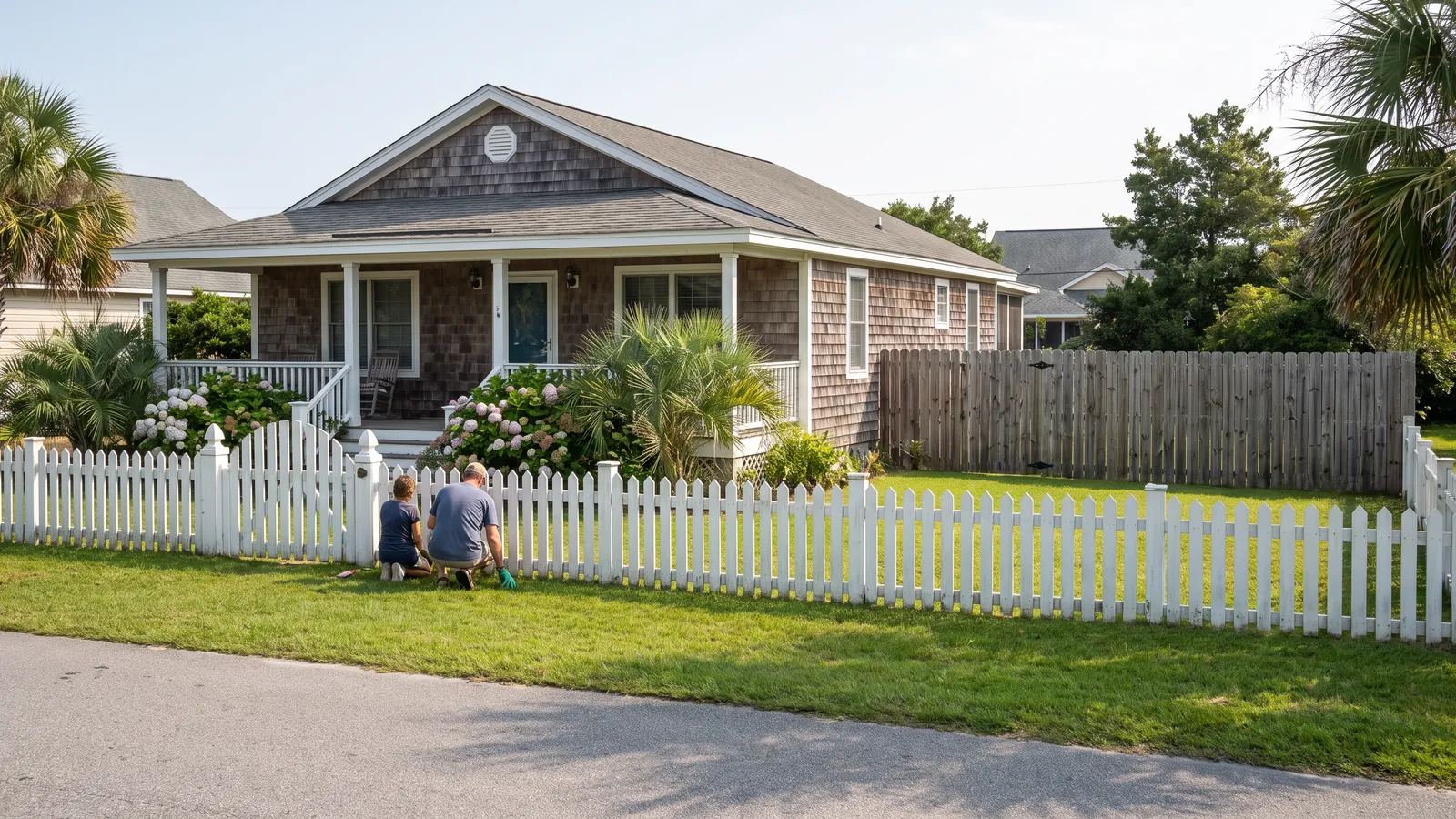
There is no single North Carolina fence height. Heights are set locally by city and county zoning, by the beach towns, and by HOAs. Across the Wilmington area, though, the same pattern comes up again and again: lower fences in front yards, where they affect the street, and taller fences in side and rear yards, where privacy matters.
The common pattern
- Front yards: commonly limited to around four feet, and often required to be open, like a picket or aluminum fence, rather than solid.
- Side and rear yards: commonly up to six feet.
- Taller than six feet: often requires a permit or special approval, if allowed at all.
Inside the City of Wilmington, published sources disagree on exactly when a permit is needed, with some pointing to fences over six feet and front-yard fences over four feet. We confirm before building.
Corner lots and sight lines
On a corner lot, a fence near the intersection can block drivers' view. Many ordinances limit height or require openness in a sight triangle near the corner. If your lot is on a corner, mention it on the first call.
Pool barriers
Pools work the other way: the state building code sets a minimum barrier height of four feet. A fence around a pool must be at least that tall, measured from the outside.
HOAs
HOA standards are often stricter than the town's. Some limit rear fences to five feet, require a certain style in front, or forbid front-yard fences entirely. Your covenants and design guidelines are the place to look.
Measuring height on a slope
When a fence steps down a slope, the height at each section can vary. Rules usually specify how height is measured; we design stepped sections so each one stays within the limit.