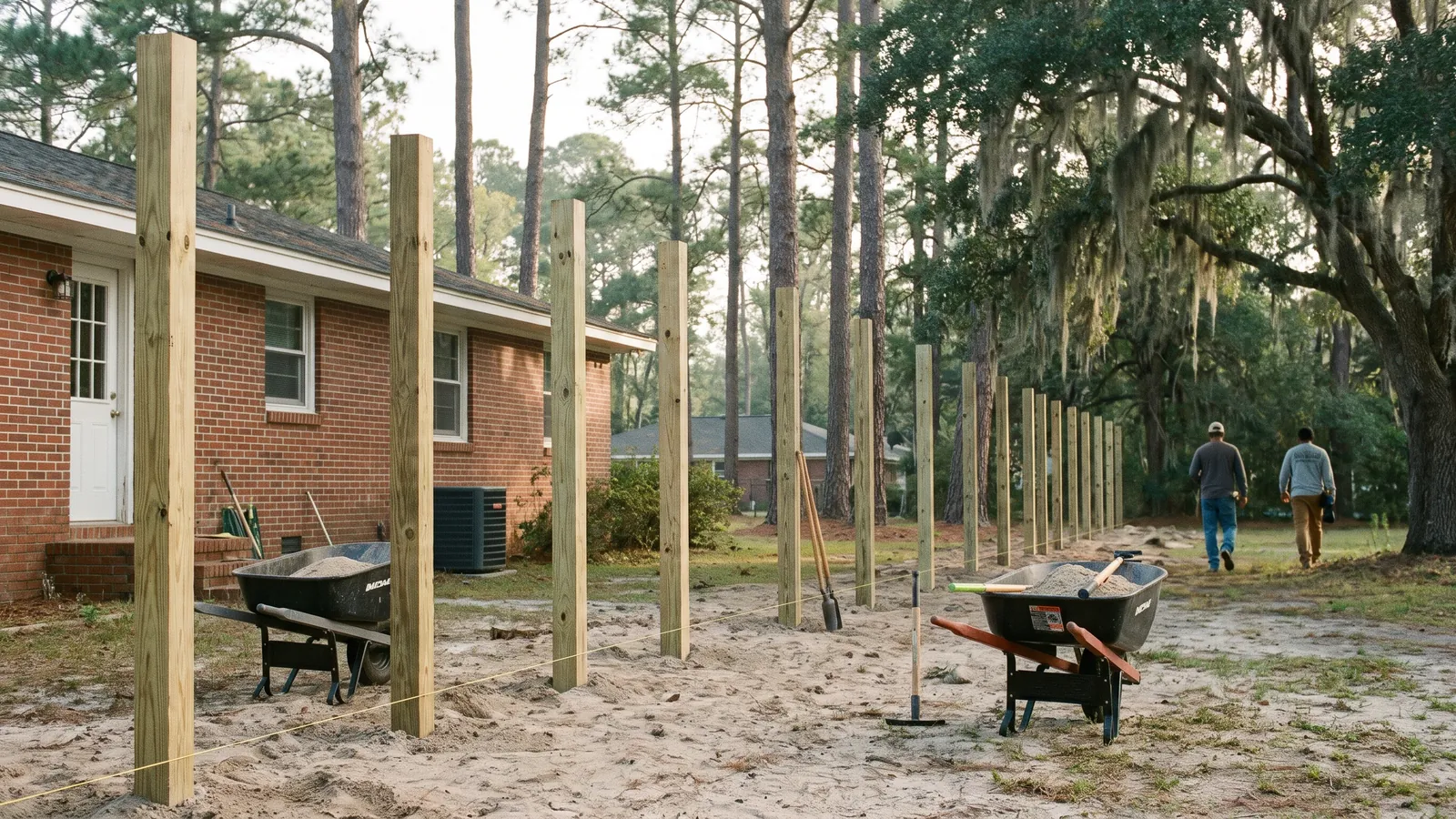
Fence installation that starts with the post holes, not the panels
Anyone can hang a panel. Whether it is still straight after the next tropical storm depends on how deep the post went, what it was set in and how far apart the posts stand.
A new fence in the Wilmington area is a small construction project with three hidden parts: the line, the ground and the rules. The line is where the fence actually goes, which is not always where the old fence stood. Many backyards in the older parts of the city and in Castle Hayne have fences that drifted a foot or two off the property line decades ago, and a new fence built on the old holes inherits the mistake. We work from the plat or the survey pins, flag the corners and pull a string before anyone digs.
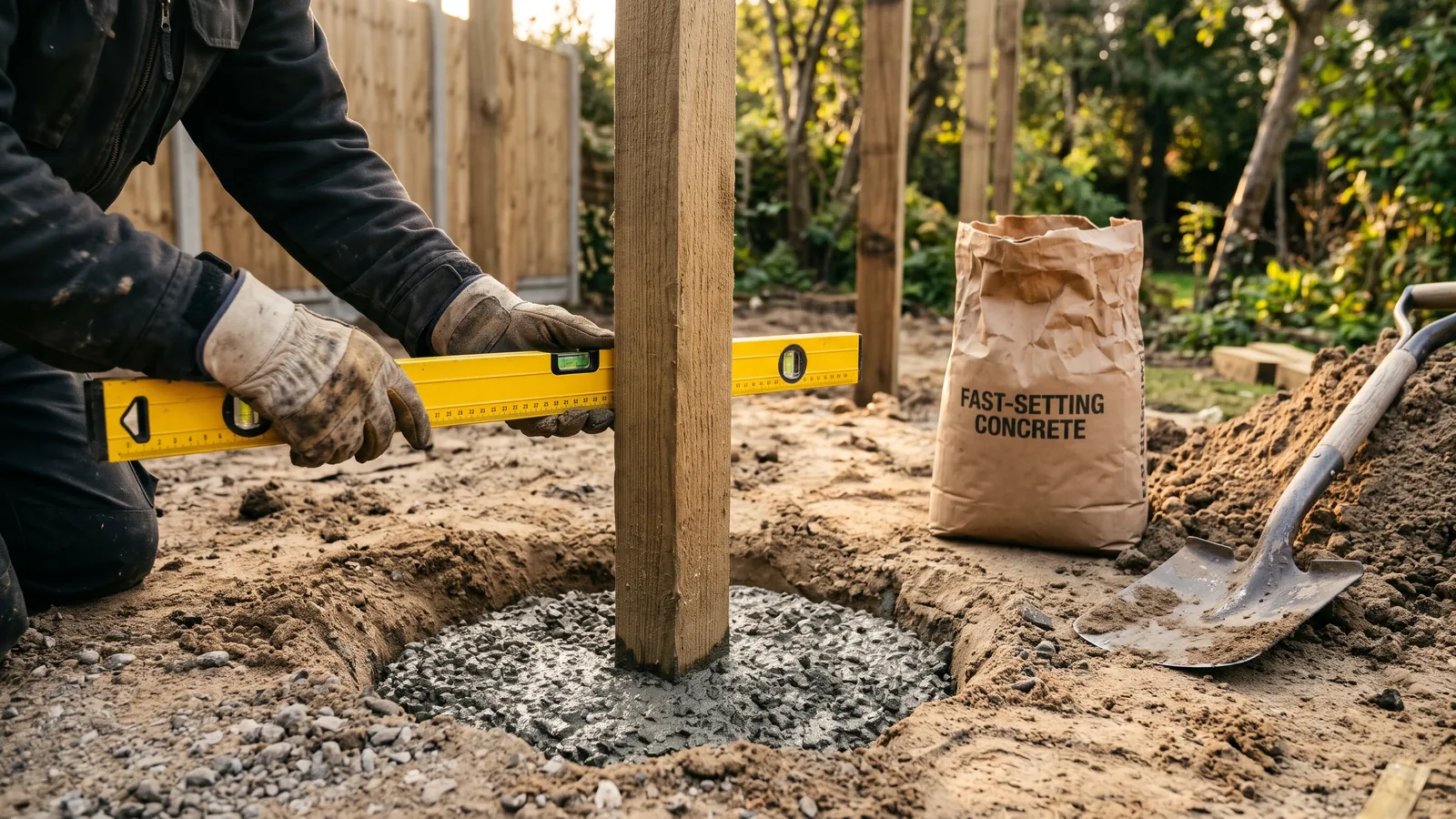
The ground is the coastal part of the job. Sand drains fast but holds a post poorly, and in the low parts of Monkey Junction, Murrayville and the Leland subdivisions the water table sits close to the surface after rain. Posts on a six-foot privacy fence go roughly a third of their height into the ground, set in concrete that is wider at the bottom than a sand-filled hole would be, and crowned so rain runs off instead of pooling against the wood. Gate posts and corner posts go deeper and heavier than line posts because they carry the most load.
The rules come last but are checked first: whether the City of Wilmington or the county wants a permit for the height you have in mind, what the HOA's design standards allow, whether the lot sits in a FEMA flood zone where a fence cannot block drainage, and whether there is a pool on the property that turns the fence into a legal barrier.
How an installation runs
- Measure and draw. Every run is measured, gates and corners marked, slope and drainage noted, and the drawing goes into the written estimate
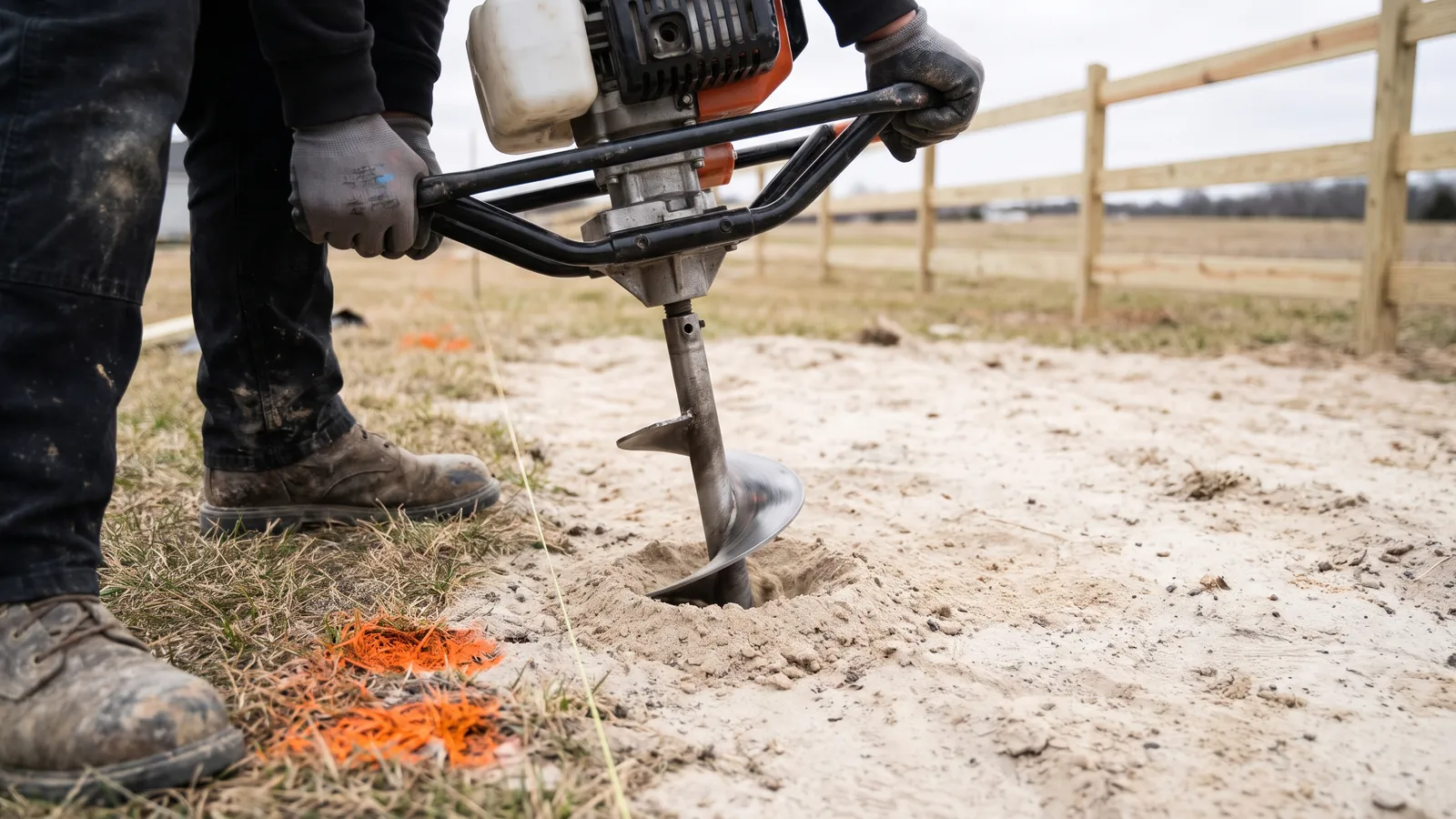
- Locate utilities. A utility locate is requested so water, sewer, power and cable lines are flagged before the auger touches the ground
- Set the posts. Holes are bored to depth, posts set plumb in concrete along a taut string, and the concrete is left to cure
- Hang the fence. Rails, pickets, panels or mesh go up, cut to follow the grade, with gaps kept even at the bottom
- Gates and finish. Gates are hung, adjusted to swing and latch, caps fitted, and the yard is raked clear of spoil and offcuts
Installed prices around Wilmington
| What | Typical 2026 range | Notes |
|---|---|---|
| Pressure-treated pine privacy, 6 ft | $28 – $42 / ft | Dog-ear or flat top, three rails |
| Vinyl privacy, 6 ft | $38 – $62 / ft | White costs least; tan and grey a little more |
| Aluminum, 4 ft residential | $36 – $60 / ft | Black powder coat |
| Chain link, 4 ft galvanized | $16 – $28 / ft | Black coated adds roughly a third |
| Walk gate, 4 ft wide | $350 – $1,000 | Depends on material |
| Old fence removal and haul-off | $3 – $7 / ft | Concrete-set posts at the higher end |
These are 2026 planning ranges for typical residential jobs, not quotes. Your price comes from the measured line and is written down before anything is ordered.
Questions about fence installation
How deep do fence posts go in sandy soil?
As a rule of thumb, about a third of the post's above-ground height, plus extra for gate and corner posts. On a six-foot privacy fence that means roughly two feet or more into the ground, set in concrete. Low, wet spots and exposed waterfront lots get deeper holes.
Can you build on the old fence line?
Only once we know the old line is right. Older fences in town often wandered off the property line. We check against the plat or survey pins first; if they are missing, a surveyor can re-mark them before we dig.
Do I have to be home during the install?
Not for the whole job. We like someone there at the start to confirm the line and gate positions, and at the end for a walk-through. Pets need to stay inside while holes are open.
What happens to my old fence?
If you want it gone, we pull it, including the concrete around the old posts where we can, and haul it off. That line item is on the estimate.
Do you handle the permit?
Where a permit is needed, we tell you at the estimate and can file it. HOA approval normally has to come from the homeowner, so we give you the drawing and the product sheet to send in.
Related pages
Price your fence installation project
Tell us where the fence goes and what you have in mind. An estimator comes out, measures the line and leaves a written price, free of charge.
- Measured on site, not guessed from a photo
- Material, height and gates priced line by line
- Or call (910) 807-8208. Calls answered 24 hours, 7 days.